How to Be a Good Podcast Guest
What hosts actually want from a guest, how to prepare without sounding rehearsed, and the answer habits that get you clipped, quoted and invited back.
What hosts actually want, how to prepare so you sound informed rather than rehearsed, the answer habits that get your words clipped and shared, and the technical basics that stop a good conversation from being unusable.
Being a good podcast guest comes down to four things: listen to two episodes before you record, prepare three real stories rather than talking points, answer in self contained statements, and sort your audio. Everything else is detail.
The useful question is not "what should I say?" It is "what will the host be able to use?" A guest whose answers can be clipped, quoted and shared gets invited back, gets recommended to other hosts, and reaches far more people than the episode itself ever will.
Before the recording
Listen to two episodes. Not the trailer, two full episodes. You are listening for the format, the typical length of an answer, how formal the register is, and the questions the host asks everyone. Fifteen minutes of listening is the single highest return preparation available and most guests skip it.
Note the repeated questions. Nearly every host has three or four they ask every guest. You will be asked them. Knowing what they are means you arrive with a real answer rather than an improvised one.
Research the host, not just the show. What they have written, what they care about, what they have changed their mind about. A guest who references something the host said six months ago has already changed the dynamic of the conversation.
Prepare three stories, not talking points. This is the difference between a forgettable guest and a memorable one. Talking points produce abstractions. A specific story with a number in it, a mistake you made, or a moment something changed is what listeners remember and what gets clipped.
Confirm the recording method a week ahead. Not five minutes before. Whether you are recording locally, whether you need to install anything, whether video is being used. Discovering a software requirement at the start of the session wastes the host's time and starts you off flustered. The capture side is covered in how to record a podcast remotely.
Ask what they want from it. One message asking what the episode is meant to cover and who it is for. Hosts rarely get asked and it changes the quality of what you bring.
Sort the audio, because nothing else survives bad sound
A brilliant guest with poor audio is an episode that does not get published, or one that gets published and not shared.
Headphones, always. Without them your speakers feed the host's voice back into your microphone, producing echo that cannot be cleanly removed. This is non negotiable and it is the most common failure.
Any external microphone beats a laptop microphone. Even wired earbuds with an inline mic are a significant improvement, because the distance from your mouth is what matters most.
Sit three to six inches from the microphone. Most people sit too far back and compensate by raising their voice, which makes the room louder rather than the voice clearer.
Find a soft room. Carpet, curtains, a sofa, books. A bare room with hard walls produces echo, and echo is the one thing that genuinely cannot be fixed afterwards.
Close the window, silence your phone, and tell the household. Intermittent noise is harder to deal with than constant noise.
Do a test recording the day before. Record thirty seconds on the actual setup and listen on headphones. Almost every problem is audible immediately and invisible if you do not check.
The answer habits that matter
This is the section that separates a good guest from a useful one.
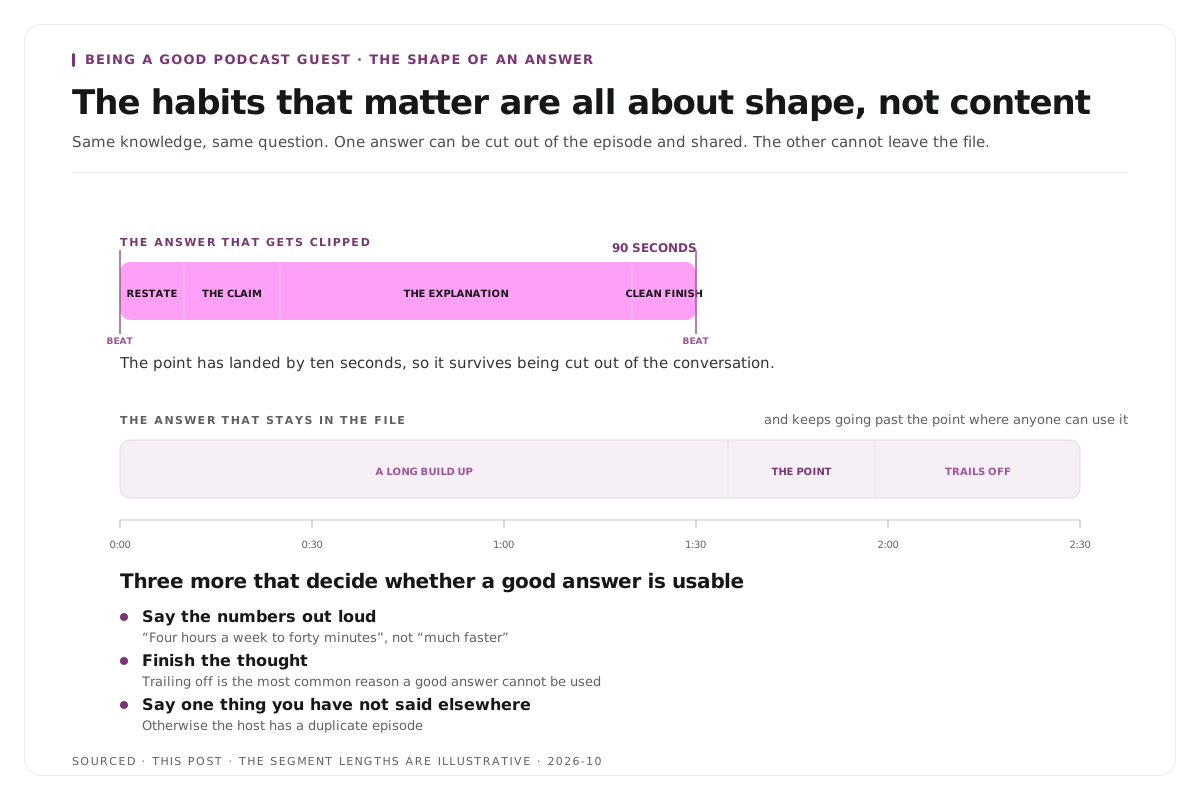
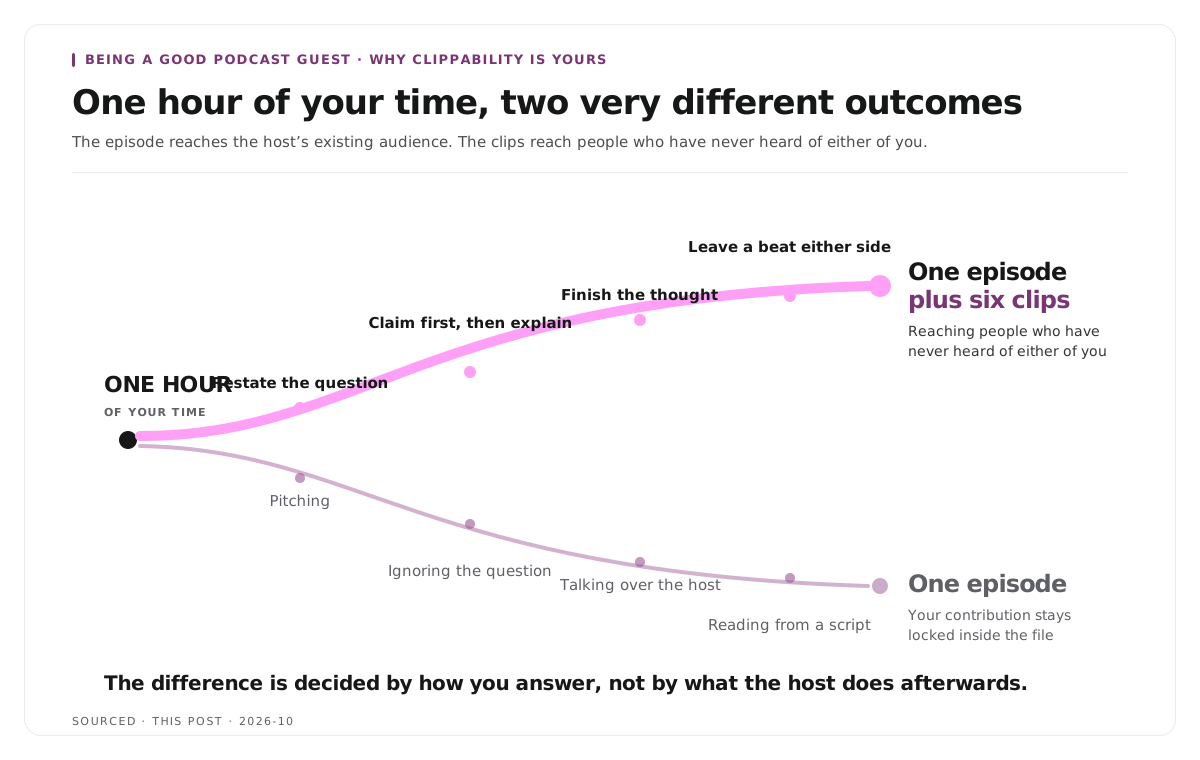
Restate the question inside the answer. Asked "what is the biggest mistake people make with pricing?", begin with "the biggest mistake people make with pricing is..." It sounds composed, and it means the answer makes sense on its own when it is cut out of the episode. This single habit does more for your reach than anything else on this page, and it is the mechanism described in 60 podcast interview questions that produce clippable answers.
Lead with the claim, then explain. Not a three minute build up to a point. Say the thing, then unpack it. If you are cut off, the point has already landed.
Keep answers to about ninety seconds. Long enough to say something, short enough to stay listenable. A six minute answer is almost never better than a ninety second one, and it is unusable as a clip.
Say the numbers out loud. "We went from four hours a week to forty minutes" is specific and memorable. "It got much faster" is neither.
Finish your thoughts. Trailing off is the most common thing that makes an otherwise good answer impossible to use.
Leave a beat before and after. Do not start answering over the end of the question, and pause briefly before the host speaks again. Overlapping audio is the main reason a strong moment cannot be cut cleanly.
Say one thing you have not said elsewhere. If every answer is what you said on four other shows, the host has a duplicate episode and listeners who follow you have heard it.
Things guests do that make hosts wince
Pitching. Mentioning what you do once, in context, when asked, is expected. Steering every answer toward your product is the fastest way to not be invited back and often to not be published.
Ignoring the question. Answering the question you prepared instead of the one asked is obvious to listeners and irritating to hosts.
Talking over the host. Particularly on remote recordings where latency makes it worse. Leave a beat.
Being relentlessly positive. A guest who agrees with everything and has no strong opinions produces a bland episode. A respectful disagreement is the most listenable thirty seconds in most interviews.
Arriving with nothing. "Whatever you want to ask" sounds relaxed and produces a weak conversation. The host is doing the work for both of you at that point.
Bringing a script. Reading answers is audible immediately and removes everything that makes an interview worth listening to.
After the recording
Share it when it goes out. The most common complaint hosts have about guests, and the easiest thing to get right. Post it once properly rather than a link with no context.
Ask for the clips. Many hosts cut short clips from each episode. Asking whether you can have them gives you several pieces of content from an hour you have already spent, and hosts are generally happy to share. The production side is in how to make shareable podcast clips for social media.
Introduce the host to one other guest. Costs you nothing, and it is the thing that gets you recommended to other shows.
Note what worked. Which answers the host reacted to, which ones you fumbled. The next interview is easier if you treat the last one as information.
Why clippability is in your interest, not just the host's
Worth being explicit about, because guests often treat it as the host's problem.
The episode reaches the host's existing audience. The clips reach people who have never heard of either of you, on platforms where discovery still happens, for months afterwards.
If your answers are self contained, with a claim at the front and a clean finish, they can be cut and shared. If they ramble, depend on the previous question, or trail off, they cannot, and your contribution stays locked inside a fifty minute file.
An hour of your time produces either one episode or one episode plus six clips, and the difference is decided by how you answer rather than by what the host does afterwards. Realistic expectations for that output are in how many clips you should make from one podcast episode.
Worked example: two guests, same show
This is an invented example, not measured data.
Two specialists appear on the same podcast in consecutive weeks.
The first has not listened to the show, answers in five minute stretches, begins most answers with "yeah, so, I think it depends", and mentions their product in six of nine answers. The episode is fine. Nothing in it can be cut into a clip, because no answer stands alone, and the host does not follow up about a second appearance.
The second listened to two episodes, arrives with three stories, restates questions inside answers, and keeps responses to about ninety seconds. The episode produces five clips. Two of them travel further than the episode. The host recommends them to another show within a month.
Same expertise, same hour. The difference was preparation and answer shape, neither of which required more knowledge.
Where Montage fits
Montage has no role in being a guest. It does not help you prepare, does not join the recording, and nothing on this page is something it does for you.
It is relevant to the host, and to you if you ask for the clips. Upload a recording, up to 20GB at 4K, and it returns a timestamped transcript alongside 8 to 10 scored clip candidates, each trimmable by editing the transcript text, with branded captions and vertical reframing applied, exporting as MP4 for social or XML, FCPXML and JSON for an editor.
The reason it is worth knowing about as a guest is the constraint. Scoring finds the strongest moments a recording contains and cannot create one that is not there. If none of your answers stand alone, there is nothing to find, which is why the answer habits above matter more than anything the host does afterwards. The pipeline is explained in how AI video clipping works, and you can try it on one recording with the podcast clip finder.
Limitations and troubleshooting
The host said the audio was unusable. Almost always echo from speakers rather than headphones, or sitting too far from the microphone. Both are fixable before the next one and neither is fixable afterwards.
I rambled and know it. Tell the host which answer you want to redo. Most will happily record it again, and almost all prefer that to editing around a weak answer.
I was asked something I could not answer. Say so. "I do not know" is a better forty seconds than an invented answer, and listeners trust it.
Every answer came out as a product pitch. Prepare three stories in advance that have nothing to do with your product. Without them, the product is the only material you have.
The episode went out and nothing happened. Normal for a single appearance. Guesting compounds across several shows over months rather than producing a spike from one.
I was not invited back. Common causes in order: too promotional, answers too long, did not share the episode. All three are easy to change.
Frequently asked questions
How do you prepare to be a podcast guest?
Listen to two full episodes, note the questions the host asks everyone, research the host rather than only the show, prepare three specific stories rather than talking points, and confirm the recording method a week ahead.
What makes a good podcast guest?
Self contained answers of around ninety seconds that lead with the claim, specific stories with real numbers, a willingness to disagree respectfully, and audio that does not make the episode difficult to publish.
How long should podcast answers be?
Around ninety seconds. Long enough to make a point properly, short enough to stay listenable, and short enough to work as a standalone clip.
What should a podcast guest avoid doing?
Pitching throughout, answering a different question than the one asked, talking over the host, agreeing with everything, arriving with nothing prepared, and reading from a script.
What equipment does a podcast guest need?
Headphones, which are non negotiable, and any external microphone, used from three to six inches away, in a room with soft furnishings. A quiet soft room matters more than an expensive microphone.
Should you ask the host for the clips?
Yes. Many hosts cut clips from each episode, most are happy to share them, and it gives you several pieces of content from an hour you have already spent.
Does Montage help podcast guests?
Not directly. It processes a host's recording into clips. It is worth knowing as a guest only because clip selection can only find moments that stand alone, which is determined by how you answer.