How to Overcome the Fear of Being on Camera
Why being on camera feels so exposing, what actually reduces the fear, and a graded practice plan that works without pretending the anxiety is irrational.
Why speaking to a lens feels worse than speaking to a room, which techniques actually reduce the anxiety, and a graded plan for getting comfortable without waiting to feel ready first.
The fear of being on camera is reduced by repetition under low stakes, not by preparation. Recording short clips nobody will see, watching them back, and gradually increasing the exposure does more than any amount of scripting, lighting or equipment.
The useful question is not "how do I stop being nervous?" It is "what specifically am I afraid of?" People usually find the answer is not the camera at all. It is being watched, being judged on appearance, or seeing themselves played back, and those have different remedies.
Why it feels worse than speaking to a room
This is worth understanding rather than dismissing, because the usual advice to "just be yourself" fails for a reason.
There is no feedback. In a room you read faces, adjust, and know whether you are landing. A lens returns nothing. The brain fills that silence with the worst available interpretation.
It is permanent. A fumbled sentence in a meeting evaporates. The same sentence on camera exists as a file, can be replayed, and can be shared. That is a genuinely different exposure, not an imagined one.
You are watching yourself. Most setups show your own face while you speak, which is an unnatural condition no other form of conversation imposes. It splits attention between what you are saying and how you look saying it.
The audience is imagined and therefore unlimited. Speaking to twelve people in a room is concrete. Speaking to a lens means speaking to an unbounded hypothetical, and anxiety scales with that.
None of this is irrational. The discomfort is a reasonable response to an unusual situation, and treating it as a personal failing is both inaccurate and unhelpful.
Name the specific fear first
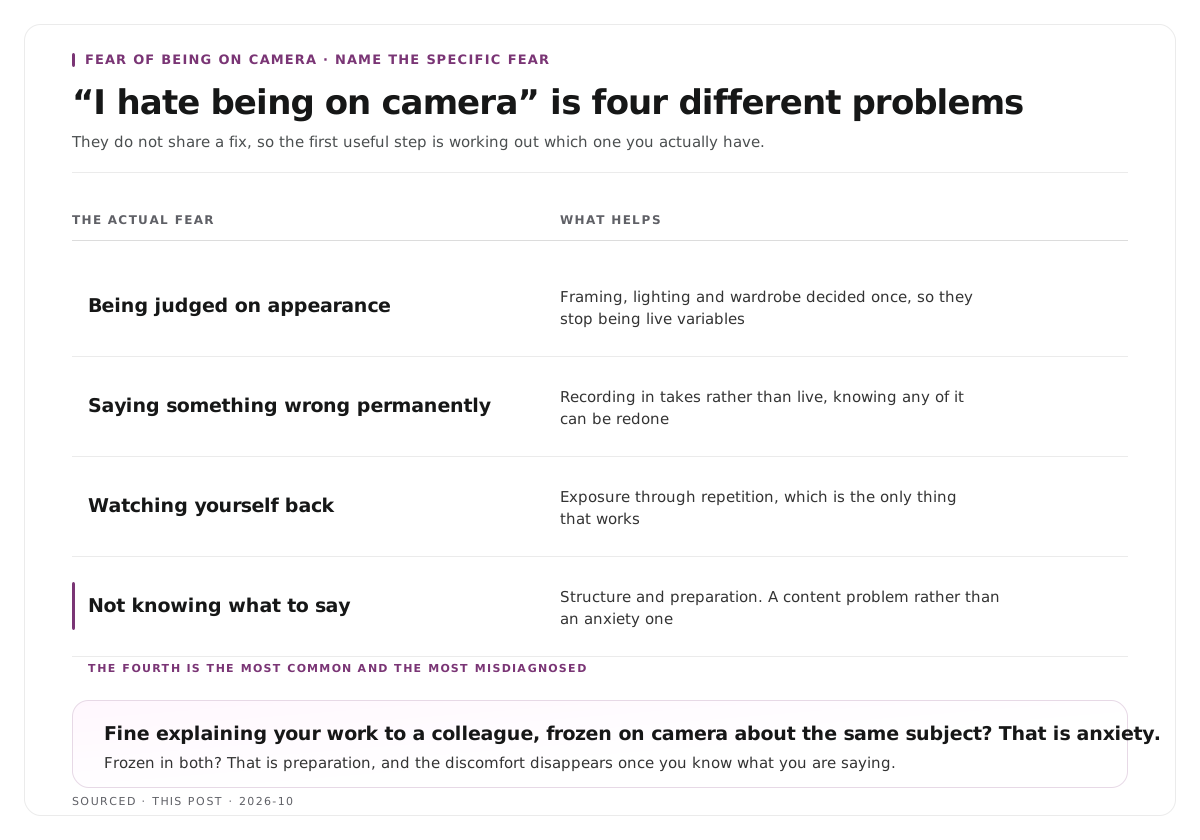
"I hate being on camera" usually resolves into one of four things, and they do not share a fix.
| The Actual Fear | What Helps |
|---|---|
| Being judged on appearance | Framing, lighting and wardrobe decided once, so it stops being a live variable |
| Saying something wrong permanently | Recording in takes rather than live, knowing it can be redone |
| Watching yourself back | Exposure through repetition, which is the only thing that works |
| Not knowing what to say | Structure and preparation, a content problem rather than an anxiety one |
The fourth is the most common and the most misdiagnosed. People conclude they are camera shy when they are actually underprepared, and the discomfort disappears once they know what they are saying. If you feel fine talking about your work to a colleague and freeze on camera about the same subject, it is anxiety. If you freeze in both, it is preparation.
What actually reduces it
Repetition under low stakes. This is the one that works and there is no substitute. Record five seconds, then fifteen, then a minute. Delete all of it. The goal is accumulating reps, not producing anything.
Record yourself privately and watch it back. Unpleasant the first few times and it is the mechanism. Most of the fear of seeing yourself comes from rarely seeing yourself. The tenth playback is unremarkable.
Decide the variables once. If framing, lighting, background and wardrobe are settled in advance, none of them is a live decision while you are already uncomfortable. The setup side is covered in talking head videos.
Breathe deliberately before the take. Nervousness produces shallow breathing, shallow breathing produces a tight voice, and a tight voice reinforces the feeling. Two or three slow breaths before you start interrupts that loop.
Talk to one person. Imagine a specific individual behind the lens, ideally someone you find easy. "Explaining this to Sam" is a different cognitive task from "performing for an audience", and the face relaxes accordingly.
Move. Gesture, lean, shift. Holding still is what nervous people do, and stillness both looks tense and feels tense.
Know the first sentence cold. Not the whole script. The opening is where most freezes happen, and having it memorised carries you past the worst moment.
What does not help
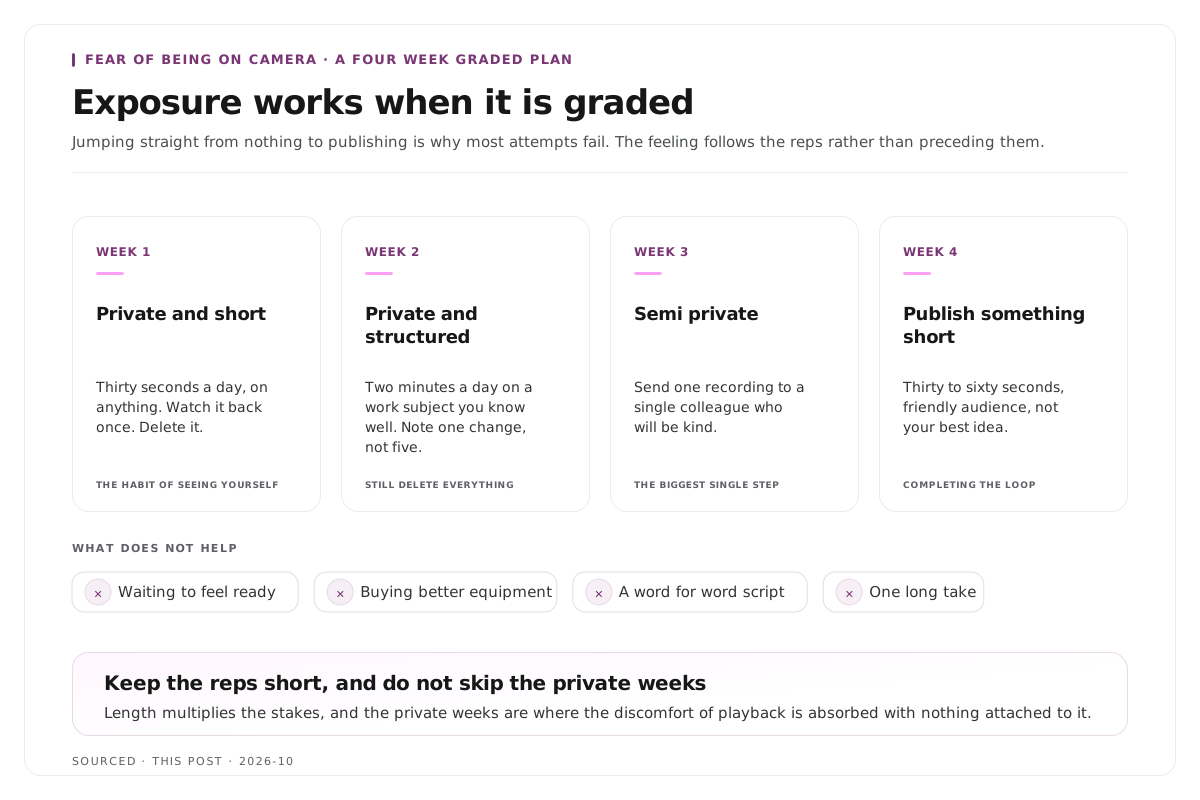
Waiting to feel ready. The feeling follows the reps rather than preceding them. Nobody becomes comfortable by preparing more.
Buying better equipment. A better camera does not address any of the four fears above. It is a satisfying form of avoidance, and the equipment question is genuinely separate, covered in video podcast equipment.
Writing a word for word script. It tends to produce a recited delivery, which looks less natural and therefore increases self consciousness on playback. The exception is a very short piece where you have rehearsed it to the point of fluency.
Doing one long take. Raising the stakes of every moment is the opposite of what you need early on. Short takes, more of them.
Being told to relax. Including by yourself.
A four week graded plan
Exposure works when it is graded. Jumping from nothing to publishing is why most attempts fail.
Week one, private and short. Record thirty seconds a day on your phone about anything. Watch each one back once. Delete it. The only objective is the habit of seeing yourself.
Week two, private and structured. Record two minutes a day on a work subject you know well. Watch back and note one thing to change, not five. Still delete everything.
Week three, semi private. Send one recording to a single colleague who will be kind. The shift from nobody to one person is the biggest single step in the whole plan, and it is much easier after two weeks of reps.
Week four, publish something short. Thirty to sixty seconds, on a subject you are confident about, to an audience that is already friendly. Not your best idea. The objective is completing the loop, not performance.
Two rules make it work. Keep the reps short, because length multiplies the stakes. And do not skip the private weeks, because they are where the discomfort of playback is absorbed without any consequence attached.
The part nobody mentions: editing changes the stakes
A significant source of camera anxiety is the belief that the recording has to be good in one pass. It does not, and knowing that in advance changes how it feels to record.
You can restart any sentence. Pause, take a breath, say it again. Both attempts are in the file and the bad one is removed later.
Filler and fumbles are routinely cut. Every polished video you have seen was trimmed. The gap between what people record and what people publish is enormous, and comparing your raw footage to someone else's edit is the most common and most demoralising error.
Jump cuts are normal. Removing a stumble leaves a visible join and audiences are entirely used to it, which is covered in jump cuts.
Recording with that knowledge is materially different from recording as though it is live. The simplest way to internalise it is to deliberately fluff a line, restart, and then see how invisible the repair is.
Worked example: two people, same anxiety
This is an invented example, not measured data.
Two specialists are asked to record short videos about their work. Both are uncomfortable.
The first prepares. They write a full script, buy a light, rehearse, and schedule a recording day three weeks out. On the day, the script makes them sound recited, the unfamiliar light is one more thing to think about, and they record for two hours, hate all of it, and conclude they are not a video person.
The second starts badly on purpose. Thirty seconds a day on their phone for two weeks, deleted immediately. By week three the playback is unremarkable. They record the real thing in four short takes with no script, only bullet points, and it is not polished and it is watchable.
Same anxiety, same starting point. The difference is that the second person treated it as a skill acquired through reps rather than a performance to prepare for.
Where Montage fits
Montage does not record anything, does not coach delivery and has no part in getting you comfortable on camera. Everything on this page happens before it is involved.
Where it is relevant is the stakes point above. Upload a recording, up to 20GB at 4K, and it returns a timestamped transcript alongside 8 to 10 scored clip candidates, each trimmable by editing the transcript text, with branded captions and vertical reframing applied, exporting as MP4 for social or XML, FCPXML and JSON for an editor.
Trimming by transcript matters for a nervous speaker specifically, because removing a fumble means deleting the words rather than finding the exact waveform position, which is covered in text based video editing. Recording in several short takes and cutting afterwards is far easier than performing one clean take, and that is a reasonable thing to rely on rather than something to feel bad about.
To try it on one recording, use the podcast clip finder.
Limitations and troubleshooting
I have done twenty takes and hate all of them. Usually comparing raw footage to other people's edited output. Watch one take at normal speed without stopping, rather than scrutinising frames.
I freeze the moment recording starts. Start recording before you are ready and talk about something unrelated for thirty seconds first. The transition into the real content is far easier than starting cold.
I sound fine and look tense. Almost always stillness and shallow breathing. Move your hands, lean slightly forward, and breathe before the take.
I keep losing my place. Too much script. Switch to three or four bullet points and accept rougher wording.
It is worse when other people are in the room. Record alone. The audience in the room is a separate fear from the audience on the other end.
I have been doing this for months and it is still uncomfortable. It may become manageable rather than pleasant, and that is a legitimate outcome. Plenty of people who publish regularly still dislike recording, and the discomfort stops being a barrier well before it stops being present.
Frequently asked questions
Why am I so uncomfortable on camera?
Because a lens gives no feedback, the result is permanent, most setups show you your own face while you speak, and the audience is imagined and therefore unbounded. It is a reasonable response to an unusual situation rather than a personal failing.
How do you get comfortable on camera?
Graded repetition under low stakes. Short private recordings, watched back and deleted, building to one trusted viewer and then to a short published piece. The comfort follows the reps rather than preceding them.
Does scripting help with camera anxiety?
Usually not. A word for word script tends to produce a recited delivery that looks less natural and increases self consciousness on playback. Memorise the first sentence and work from bullet points after that.
How long does it take to get used to being on camera?
Noticeable improvement typically comes within a few weeks of daily short recordings. For many people it becomes manageable rather than enjoyable, and that is enough.
Should I watch my own videos back?
Yes, and that is the mechanism. Most of the discomfort comes from rarely seeing yourself. It is unpleasant for the first several and unremarkable by the tenth.
Will better equipment make me more confident?
No. Equipment does not address any of the underlying fears and buying it is a common form of avoidance. Settle framing and lighting once so they stop being live decisions, then stop thinking about gear.
Does Montage help with being on camera?
No. Montage processes recordings into clips. It is relevant only in that editing is routine, so recording in several short takes and cutting afterwards is a normal way to work rather than a compromise.