How to Make Money Podcasting: 8 Methods and What Each Needs
Eight podcast monetization methods, the audience size each one realistically needs, and why most shows should not start with sponsorship.
Eight ways podcasts make money, what audience size each realistically requires, and why the method everyone starts with is the wrong one for most shows.
Podcasts make money through sponsorship, listener support, affiliate sales, paid memberships, selling your own product or service, merchandise, live events and YouTube monetization. Sponsorship is the best known and the one that needs the largest audience, which is why most shows reach revenue faster through something else.
The useful question is not "how do I monetize my podcast?" It is "what do my listeners already want to buy from me?" Sponsorship rents your audience to somebody else. Every other method on this list sells them something you control, and those pay off at a far smaller scale.
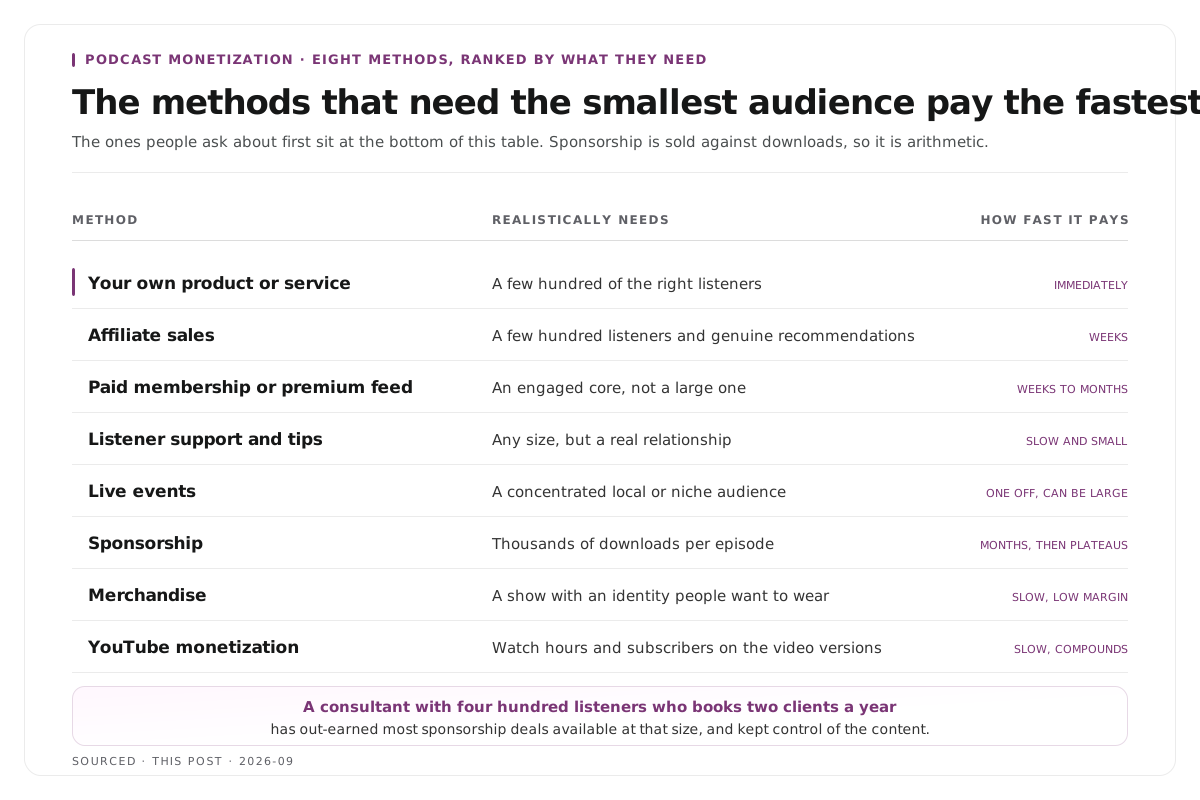
The eight methods, and what each one needs
| Method | Realistically Needs | How Fast It Pays |
|---|---|---|
| Your own product or service | A few hundred of the right listeners | Immediately |
| Affiliate sales | A few hundred listeners and genuine recommendations | Weeks |
| Paid membership or premium feed | An engaged core, not a large one | Weeks to months |
| Listener support and tips | Any size, but a real relationship | Slow and small |
| Live events | A concentrated local or niche audience | One off, can be large |
| Sponsorship | Thousands of downloads per episode | Months, and it plateaus |
| Merchandise | A show with an identity people want to wear | Slow, low margin |
| YouTube monetization | Watch hours and subscribers on video versions | Slow, compounds |
Two patterns are worth noticing. The methods at the top need the smallest audience and pay the fastest. The ones people ask about first sit at the bottom.
Start with what you already sell
If you run a business, the podcast is a sales asset before it is a media property, and the fastest revenue is almost never advertising.
A consultant with four hundred listeners who books two clients a year from the show has out-earned most sponsorship deals available at that size, and kept full control of the content. This is the path most B2B shows should take, and it changes what you make: episodes become demonstrations of how you think rather than content designed to maximise downloads.
The distribution side of that argument is in the consultants content engine, and the broader case for video as a pipeline input rather than a reach play is in how to 10x your B2B video content without adding headcount.
Sponsorship, and why it is slower than it looks
Sponsorship is sold against downloads, usually per thousand, so the revenue is a direct function of audience size. There is no clever way around that arithmetic at the start.
What sponsors ask for: download numbers per episode, listener demographics, and some evidence that your audience acts on what you say. The third is what actually closes deals and the first is what gets you the meeting.
Host read versus dynamically inserted. A host read placement you record yourself pays more and converts better. Dynamically inserted ads are placed automatically into your back catalogue and pay less per listener, but they keep earning from old episodes without any further work.
The back catalogue matters. A show with two hundred episodes and modest numbers can outperform a newer show with better current numbers, because every old episode carries an ad slot.
Do not undersell the first deal. The first rate you accept becomes your reference point, and raising it later is harder than starting higher and negotiating down.
Memberships and premium feeds
The strongest option for shows with a devoted but modest audience.
The mechanism is simple: a paid tier gets something the free feed does not. Early access, ad free versions, bonus episodes, a community, or the full version of something the public feed gets in part.
Price it above what feels comfortable. People who pay for a podcast are not looking for the cheapest option, they are supporting something they value.
Make the free feed complete on its own. A free show that is obviously a trailer for the paid one loses the audience you are converting from.
Consistency matters more than volume. One reliable bonus episode a month beats an irregular three.
Affiliate sales, done credibly
Affiliate revenue is the most underrated option on this list because it scales down. It works at a few hundred listeners where sponsorship does not exist.
Only recommend what you actually use. An affiliate link to something you do not use is the fastest way to spend the trust the whole show runs on.
Say it is an affiliate link. Disclosure is a legal requirement in most jurisdictions and it costs you nothing in credibility.
Put the links where people look. Show notes, every time, in the same place. The structure for that is in how to create video chapters from a transcript.
Recommend inside the content, not as an ad break. A tool mentioned because it solved the problem being discussed converts far better than a scripted read.
Distribution is upstream of all of it
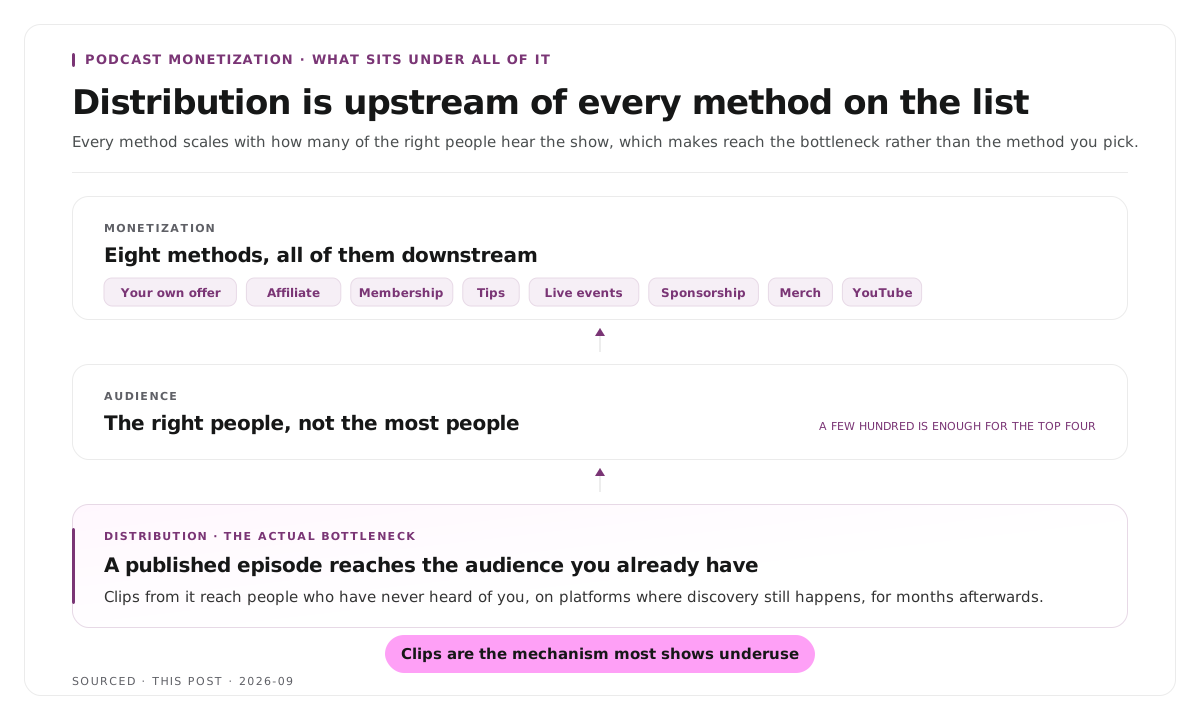
Every method above scales with how many of the right people hear the show, which makes distribution the actual bottleneck rather than the monetization method you pick.
Clips are the mechanism most shows underuse. A published episode reaches your existing audience. Clips from it reach people who have never heard of you, on platforms where discovery still happens, for months afterwards.
The practical workflow is in how to make shareable podcast clips for social media, the LinkedIn specific cadence in how to repurpose podcast episodes for LinkedIn consistently, and realistic expectations for output per episode in how many clips you should make from one podcast episode.
Worked example: two shows, same size
This is an invented example, not measured data.
Two shows have six hundred downloads an episode.
The first pursues sponsorship. At that size the available deals are small, the outreach takes months, and the one sponsor that signs pays roughly what the host earns in an afternoon of their day job. The show now also carries an ad read that its audience did not ask for.
The second sells a workshop to its own listeners twice a year and runs affiliate links for three tools it genuinely uses. The revenue is several times larger, it arrived faster, and the show kept editorial control.
Same audience, same effort, different order of operations. The second show could still add sponsorship later from a stronger position.
Where Montage fits
Montage does not sell ads, does not host your podcast, does not run memberships and has no part in taking payment. It has no monetization features.
Where it touches this is distribution, which sits upstream of every method above. Upload a recording, up to 20GB at 4K, and it returns 8 to 10 scored clip candidates rather than an unranked pile, each trimmable by editing transcript text, with branded captions and vertical reframing applied, exporting as MP4 for social or XML, FCPXML and JSON for an editor.
That is reach rather than revenue. The methods on this page are how reach turns into money, and choosing between them is a business decision no tool should make for you.
To try it on one episode, use the podcast clip finder.
Limitations and troubleshooting
No sponsor will respond. The audience is probably below the threshold where deals exist. Build revenue through your own offer or affiliates and return to sponsorship later.
The membership has very few subscribers. Usually the paid tier is not clearly better, or it was never properly explained on the free feed. Say what it contains, in an episode, more than once.
Affiliate revenue is near zero. Either the products do not match what listeners need, or the links are buried. Check the show notes placement before changing products.
Downloads are flat and every method is stalling. The bottleneck is distribution, not monetization. Clips are the cheapest way to change that.
Sponsorship revenue arrived and stopped growing. It scales with audience, so it plateaus when the audience does. Add a method that scales with depth rather than reach.
The audience reacted badly to ads. Too many, too early, or too far from what the show is about. One relevant sponsor outperforms three unrelated ones.
Frequently asked questions
How many listeners do you need to make money podcasting?
It depends entirely on the method. Sponsorship realistically needs thousands of downloads per episode. Selling your own product or service, affiliate sales and paid memberships all work from a few hundred of the right listeners.
What is the most profitable way to monetize a podcast?
For most shows, selling something you already own. Sponsorship rents your audience to a third party, while your own product, service or membership keeps the full value and works at a far smaller scale.
How much do podcast sponsors pay?
Rates are quoted per thousand downloads and vary widely by niche, audience and whether the placement is host read or dynamically inserted. Host read placements pay more and convert better.
Can you make money from a small podcast?
Yes, but not through advertising. A few hundred engaged listeners can support affiliate revenue, a paid tier, or direct sales of your own work.
Should you put your podcast on YouTube to monetize it?
It adds a revenue route through the YouTube Partner Programme and, more importantly, a discovery surface that audio platforms do not offer. Treat the reach as the main benefit and the ad revenue as secondary.
Does Montage help monetize a podcast?
No. Montage produces clips from recordings. It has no advertising, hosting or payment features, and clips affect reach rather than revenue directly.