Content Atomization vs Repurposing: The Actual Difference
Content atomization and repurposing are not the same thing. What each one means, when to use which, and why confusing them produces content nobody engages with.
What content atomization means, how it differs from repurposing, when each one is the right choice, and why treating them as synonyms produces volume without results.
Atomization breaks one asset into smaller standalone pieces. Repurposing adapts one asset into a different format for a different platform. Atomization changes the size of the thing. Repurposing changes the shape of it. Most teams do both and call it all repurposing, which is why so much of it misses.
The useful question is not "which term is correct?" It is "am I dividing this or translating it?" Those are different operations with different failure modes, and knowing which one you are doing tells you what good looks like.
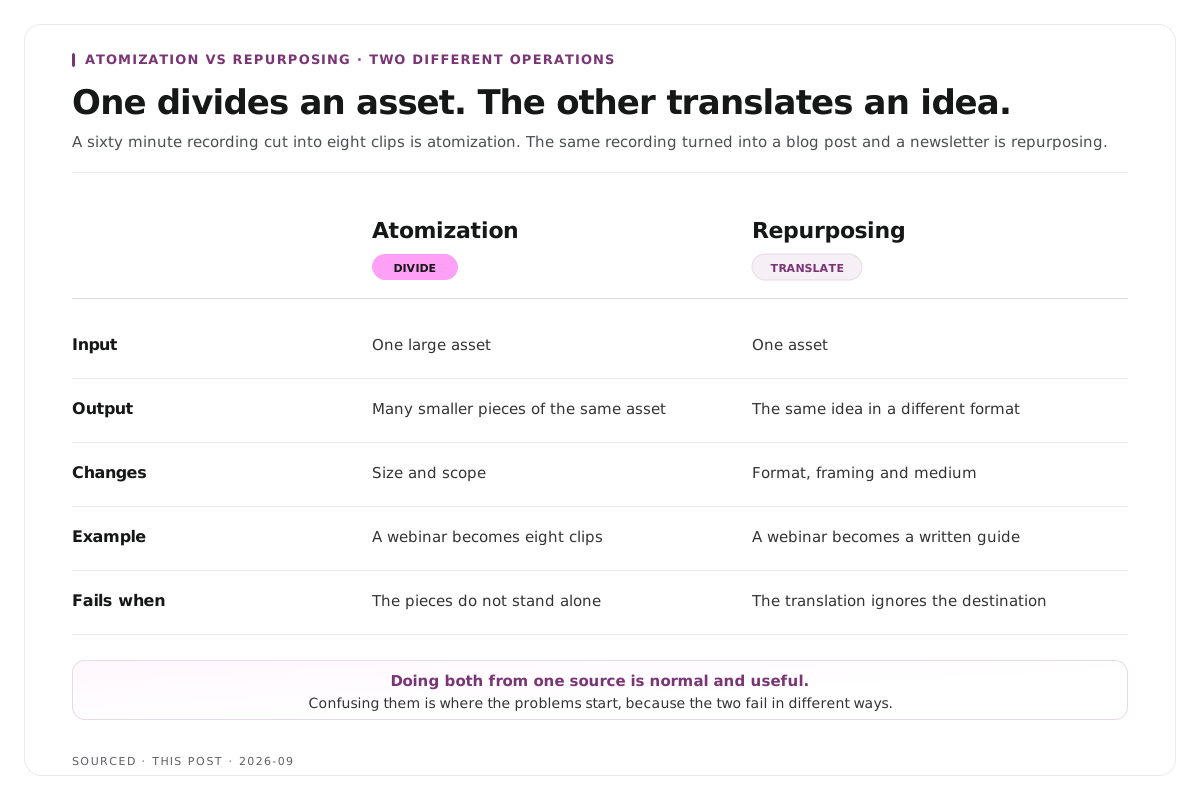
The distinction in one table
| Atomization | Repurposing | |
|---|---|---|
| Operation | Divide | Translate |
| Input | One large asset | One asset |
| Output | Many smaller pieces of the same asset | The same idea in a different format |
| Changes | Size and scope | Format, framing and medium |
| Example | A webinar becomes eight clips | A webinar becomes a written guide |
| Fails when | The pieces do not stand alone | The translation ignores the destination |
A sixty minute recording cut into eight clips is atomization. The same recording turned into a blog post, a newsletter and a carousel is repurposing. Doing both from one source is normal and useful. Confusing them is where the problems start.
Why the distinction has practical consequences
It is not a vocabulary argument. The two operations fail in different ways, so they need different quality checks.
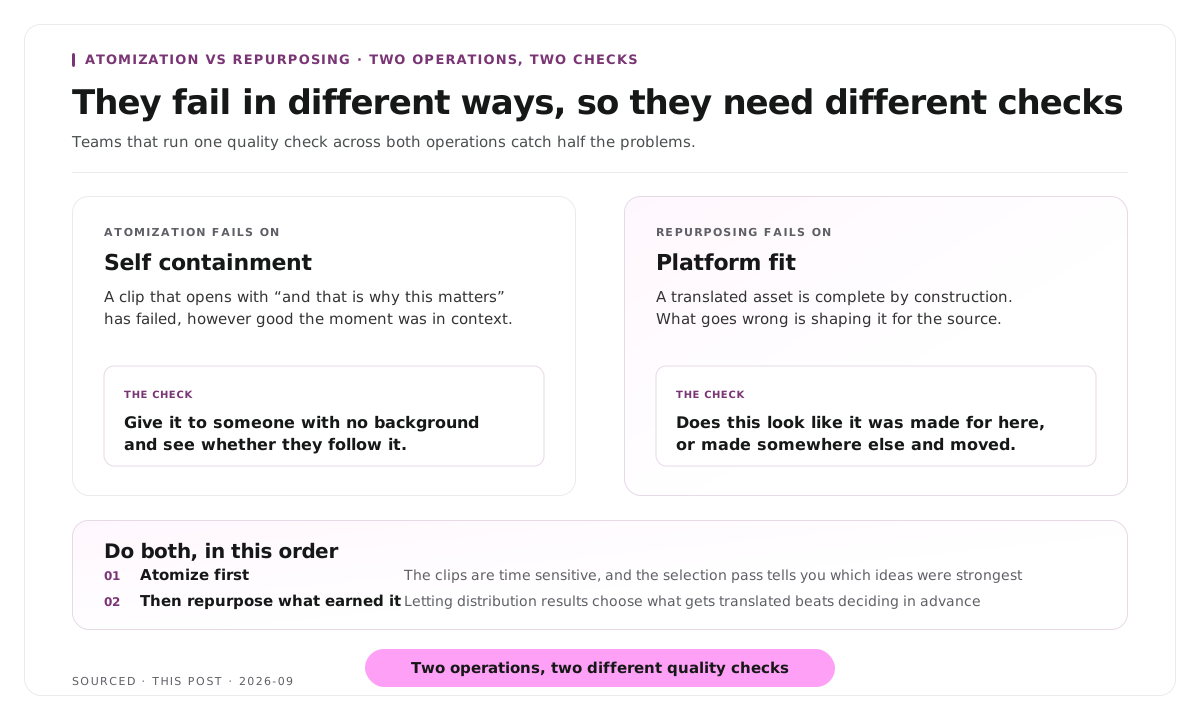
Atomization fails on self containment. The only question that matters for a piece extracted from a larger whole is whether it makes sense to someone who has not seen the whole. A clip that opens with "and that is why this matters" has failed, regardless of how good the moment was in context. The check is: give it to someone with no background and see if they follow it.
Repurposing fails on platform fit. A translated asset is complete by construction, so self containment is rarely the issue. What goes wrong is producing something shaped for the source rather than the destination, like a blog post that reads as a transcript, or a carousel that is a slide deck with the slides unchanged. The check is: does this look like it was made for here, or made somewhere else and moved.
Teams that run one quality check across both operations catch half the problems.
When to atomize
Atomization suits sources that contain discrete moments, which usually means someone speaking.
Interviews, panels, webinars, conference talks and podcasts all contain natural units, because a question and its answer is already a self contained shape. That is why this category of content produces clips well and why a scripted monologue often does not.
Realistic output is five to seven publishable clips from an hour, not thirty, and the reasoning behind that number is in how many clips you should make from one podcast episode.
When to repurpose
Repurposing suits sources with a single strong idea that deserves to exist in more than one medium.
A research finding, a framework, a strong argument or a set of data can be a video, a written piece, a carousel and a talk. None of those is a division of the others. Each is the same idea built for a different way of consuming it.
The test for whether something is worth repurposing rather than atomizing is whether it holds together as one thought. If it does, translate it. If it is a sequence of separable moments, divide it.
Doing both from one source
In practice most teams should do both, in this order.
Atomize first. The clips are time sensitive and tied to the recording, and the selection pass that produces them also tells you what the strongest ideas were.
Then repurpose what earned it. The moments that performed as clips are the ones worth building into written or long form pieces. Letting distribution results choose what gets translated is a better filter than deciding in advance.
This ordering also avoids the most common waste, which is writing a long piece from a recording before knowing which part of it anyone cared about.
The team workflow around this is in the content team video repurposing workflow, and the operational split between editorial judgement and production work is in content production workflow, why editorial and editing should be two separate jobs.
Worked example: one talk, both operations
This is an invented example, not measured data.
A forty minute conference talk presents one framework with four supporting stories.
Atomized, it produces four clips, one per story, each standing alone because a story has a beginning and an end. The framework itself does not clip well, because explaining it takes six minutes and cutting it to forty seconds removes the reasoning.
Repurposed, the framework becomes a written piece where a reader can move at their own pace and re-read the part they missed. That is a translation, and the written medium suits it better than video did.
Same talk, two operations, applied to different parts of it. Trying to atomize the framework would have produced a clip that sounded confident and explained nothing.
Where Montage fits
Montage does one of these two operations. It atomizes video and does not repurpose into other media. It does not write, does not design carousels and does not produce text derivatives.
Upload a long recording, up to 20GB at 4K, and it returns 8 to 10 scored clip candidates rather than an unranked pile, each trimmable by editing transcript text, with branded captions and vertical reframing applied, exporting as MP4 for social or XML, FCPXML and JSON for an editor.[1]
The scoring is a self containment judgement, which is the correct quality check for atomization specifically. It is a shortlist for a human to approve rather than a finished decision, because whether a moment stands alone depends on an audience the tool does not know.
To try it on one recording, use the podcast clip finder.
Limitations and troubleshooting
The clips are accurate and confusing. Classic atomization failure. The pieces are not self contained. Move the start point earlier or drop the moment.
The written version reads like a transcript. Classic repurposing failure. It was transcribed rather than translated. Rewrite for a reader rather than tidying speech.
One source produced thirty pieces and nothing performed. Volume was the goal rather than fit. Both operations are quality constrained, and neither is a multiplication trick.
The best idea in the recording will not clip. It probably needs repurposing rather than atomizing. Some ideas need length, and forcing them into forty seconds removes the reasoning that made them good.
The team cannot agree what to make from a recording. Usually because nobody has separated the two operations. Decide first whether each part is being divided or translated.
Frequently asked questions
What is content atomization?
Breaking one larger asset into smaller standalone pieces, such as cutting a webinar into eight clips. The operation is division, and the pieces have to make sense without the original.
What is the difference between content atomization and repurposing?
Atomization divides one asset into smaller pieces of itself. Repurposing translates one asset into a different format or medium. Atomization changes the size, repurposing changes the shape.
Should you atomize or repurpose first?
Atomize first. The clips are time sensitive and the selection pass shows you which ideas resonated, which is a better filter for deciding what deserves a longer written treatment.
What content works best for atomization?
Anything containing discrete moments, which usually means people speaking. Interviews, panels, webinars and podcasts atomize well because a question and its answer is already a self contained unit.
How many pieces should one asset be atomized into?
From an hour of recorded conversation, five to seven clips worth publishing. Larger claims generally count derivatives in other media rather than distinct standalone moments.
Does Montage do both atomization and repurposing?
No. Montage atomizes video into clips. Translating an idea into written or other formats is separate work.